Enterprise Architecture
Security Architecture
Security decisions made outside your architecture create gaps auditors find and attackers exploit. Connect security controls to the enterprise. Govern decisions. Make risk visible.
Governance Gaps Put Security Architecture at Risk
Most enterprises document security controls in isolation. They do not connect to applications, data, or infrastructure. Reviews are inconsistent. Audit evidence is rebuilt from scratch every cycle.
Controls Exist in Silos
Security patterns and controls are captured in documents that do not connect to application designs, data flows, or infrastructure. Gaps are invisible until something goes wrong.

Review Boards Lack Consistent Process
Architecture decisions are made ad hoc. Intake is informal. Exceptions accumulate. Teams revisit the same debates because there is no decision record to reference.

Audit Evidence Is Rebuilt Every Cycle
Compliance teams reconstruct security architecture rationale manually before every audit. Approvals, decisions, and change history are scattered across emails and documents.

The Orbus Advantage
Structure, Visibility, and Control for Security Teams
OrbusInfinity® gives security and architecture teams a shared environment to define target states, govern decisions, map controls, and produce audit-ready evidence without rebuilding it each time.
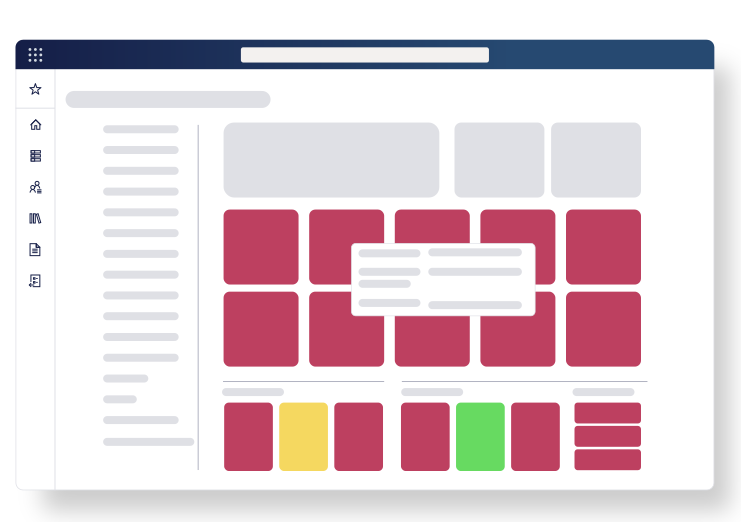
Define Your Target Security Architecture
Capture current and target security architecture states in a structured repository. Align security domains to business capabilities and technology layers so the full picture stays current.
- Model network, identity, data, and application security domains
- Align security architecture to enterprise architecture layers
- Maintain current and target state views in one place
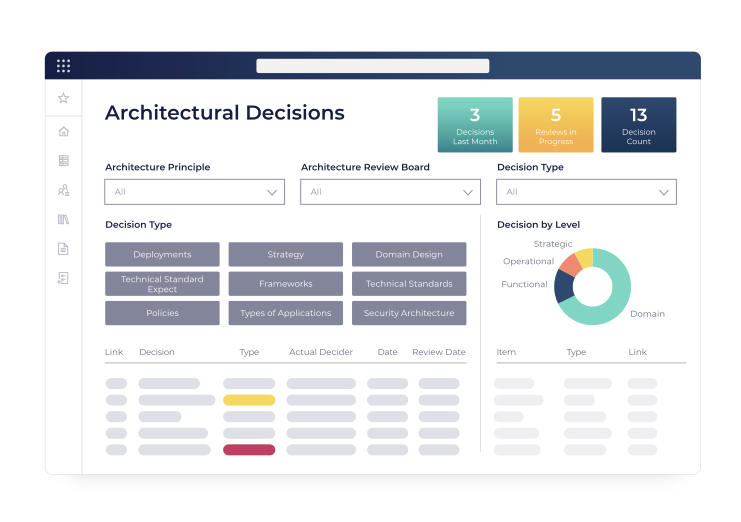
Govern the Security Architecture Review Board
Centralize governance for your Security Architecture Review Board with consistent reviews and exception handling. Capture a complete audit trail for every decision, rationale, owner, and outcome.
- Configurable intake and approval workflows for architecture reviews
- Log decisions with rationale, owner, and outcome
- Track exceptions and waivers against approved patterns
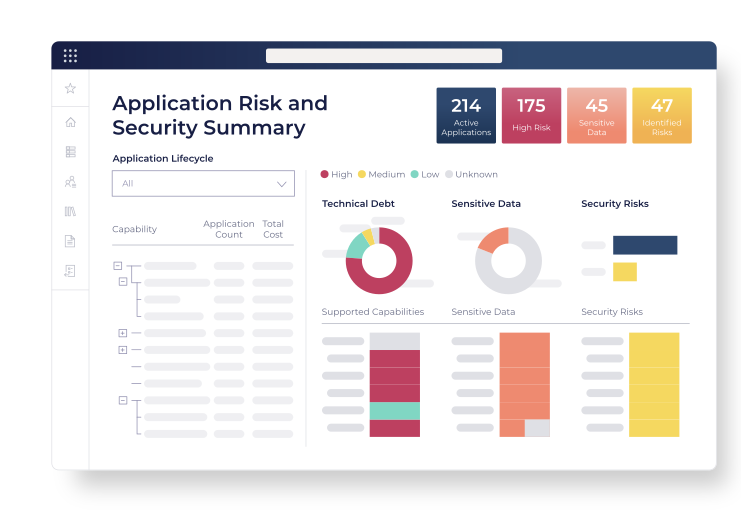
Map Security Controls to Architecture
Trace security requirements and controls to architecture elements. Identify coverage gaps and demonstrate that controls apply to the right applications, data, and infrastructure.
- Link controls to applications, data assets, and infrastructure
- Identify unmapped controls and coverage gaps
- Support security controls mapping to architecture for compliance
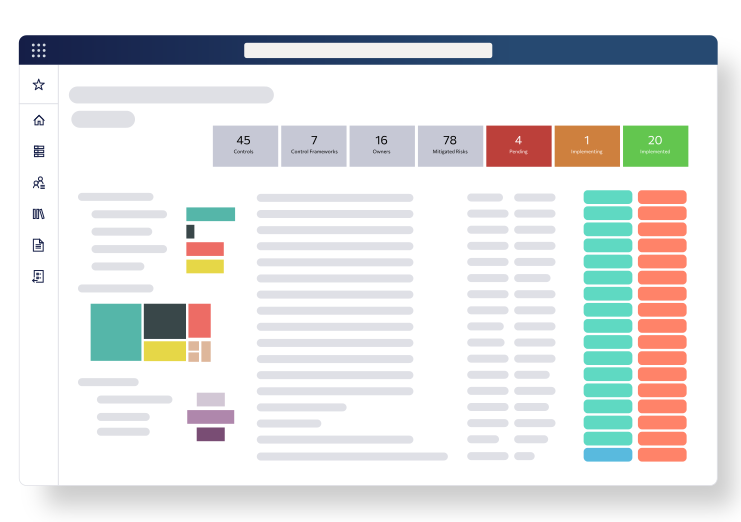
Build an Audit Trail for Architecture Decisions
Every architecture decision, approval, and change is recorded with a timestamp and owner. Compliance teams access a complete audit trail without manual reconstruction before review.
- Timestamped decision records with owner and rationale
- Change history for security architecture elements
- Exportable evidence for regulatory and internal audits
Plan and Align Zero Trust Architecture
Model your zero trust architecture strategy against your current state. Identify gaps in identity, network, and data security controls, and plan the transition roadmap.
- Map zero trust principles to current architecture elements
- Identify control gaps across identity, network, and data domains
- Align zero trust roadmap to enterprise architecture planning

Latest Success Stories
Ready To Go Further?
Take Control of Your Security Architecture Today
Book a demo to see how security teams define target architecture, map controls, run review board workflows, and produce audit-ready evidence in OrbusInfinity.