Strategy Meets Structure
Business Architecture for the Enterprise
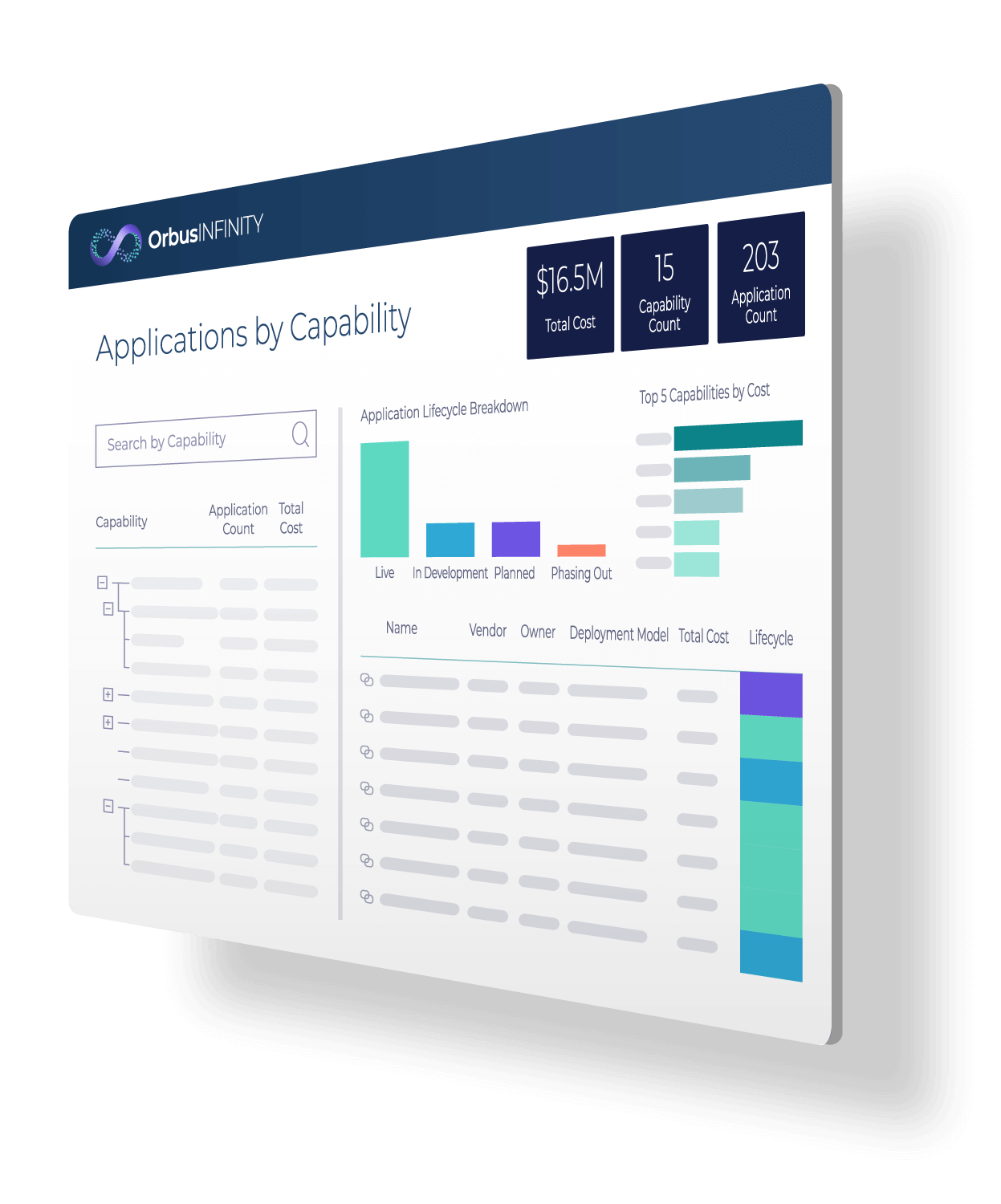
Connect strategy to execution. OrbusInfinity® gives teams a unified view of capabilities, processes, and value so you can drive smarter transformation.
Common Business Architecture Challenges
Misalignment between strategy and operations creates friction, slows decisions, and limits transformation impact.
Siloed Views of the Operating Model
Capabilities, processes, and technologies are documented in disconnected tools. Without a unified model, leaders lack the cross-functional visibility needed to prioritize investment and manage change.

Strategy Disconnected from Execution
AI investments are approved in isolation. Without a clear map of how AI capabilities connect to business outcomes, prioritization is guesswork and value leaks at every stage.

Reactive, Undifferentiated Investment Decisions
Without a clear view of capability maturity and value delivery, investment decisions default to advocacy rather than evidence. High-impact opportunities are missed; low-value spend persists.

The Art of the Possible
Turn Architecture Into a Strategic Asset
OrbusInfinity gives business and IT leaders the shared model they need to align, prioritize, and act confidently.
Unified Clarity
Build a single, connected view of your operating model, linking capabilities, value streams, processes, and technologies in one place.
Aligned Investment
Assess capability maturity and map it to strategic priorities, so investment decisions are grounded in evidence, not assumption.
Stakeholder Clarity
Communicate a shared, structured view of how the business operates, bridging the gap between architecture teams, business leaders, and operational stakeholders.
Accelerated Improvement Cycles
Identify duplication, bottlenecks, and control weaknesses across end-to-end processes, then prioritize and track improvements with clear ownership—reducing cycle time and ensuring change delivers measurable results.
Platform Capabilities
Tools to Build and Manage Business Architecture
Purpose-built capabilities that structure, connect, and activate your business architecture practice.
Capability Maps & Value Streams
Model business capabilities and value streams with rich, reusable objects linked to processes, roles, and technology.
Assessments & Heatmapping
Evaluate capability maturity with configurable assessments and visualize gaps and strengths through dynamic heatmaps.
Operating Model Integration
Connect business architecture to OrbusInfinity's EA platform for traceability across strategy, business, and IT.
Configurable Dashboards & Sites
Communicate architecture insights to stakeholders through tailored dashboards and shareable, role-based views.
Scenario & Roadmap Planning
Model future-state scenarios and build strategic roadmaps that link transformation initiatives to business capabilities.
Latest Success Stories

Explore Further
Business Architecture Use Cases
OrbusInfinity Business Architecture spans multiple disciplines, each addressing a distinct strategic challenge.
Customer Experience
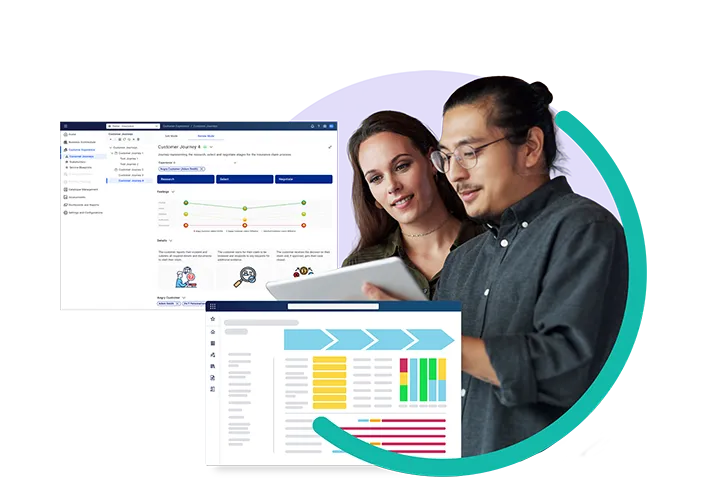
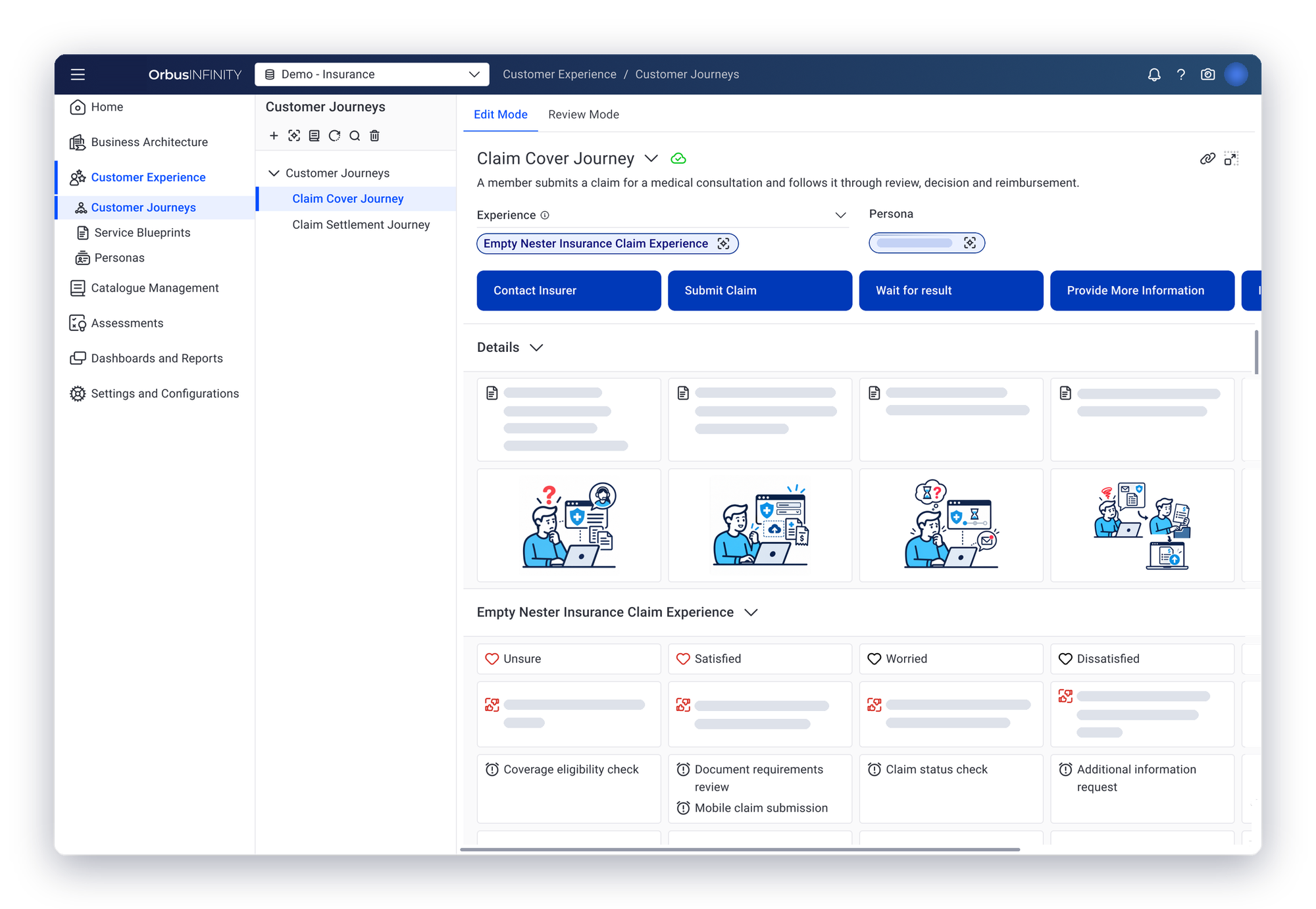
Model customer journeys, service blueprints, and persona profiles. Align experience design with value delivery so every touchpoint earns trust.
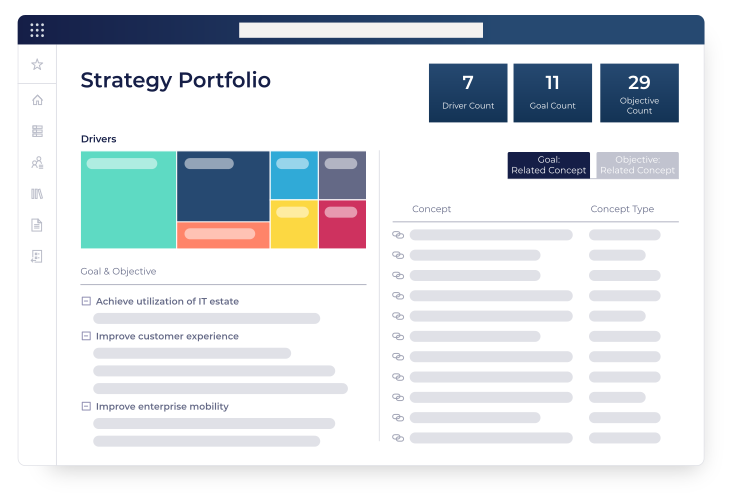
Strategy Execution
Connect strategic goals to initiatives and roadmaps, ensuring transformation stays on course.
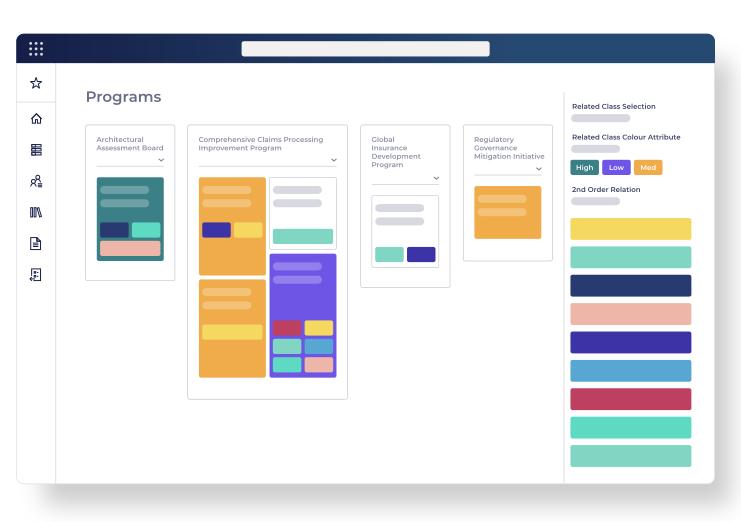
Portfolio Planning
Align investment to business capabilities and strategic priorities with structured planning.
Business Process Analysis
Identify inefficiencies, assess risk exposure, and understand the downstream impact of change.
Common questions
Business Architecture: Frequently Asked Questions
Business architecture maps capabilities, value streams, and information to strategic objectives, providing a blueprint that guides how organizations create value and transform. Done well, it gives every stakeholder a shared, governed view of how the organization operates, accelerates innovation by connecting customer insights to capability gaps, and ensures transformation programs stay on course from strategic objective through to enabling technology.
Business architecture delivers measurable value across the organization by connecting strategy, operations, and technology in a single governed model. Faster strategic alignment. Clearer investment prioritization. Improved customer experience. Reduced transformation risk. And a shared language between business and IT teams.
A business architecture framework provides the standards, methods, and reference models that guide how organizations document and govern their operating model and strategic alignment. OrbusInfinity provides a complete business architecture framework covering capability modeling, value stream mapping, customer experience design, maturity assessments, strategy and roadmapping, and innovation management, giving teams a structured foundation to build and mature their business architecture practice without starting from scratch.
OrbusInfinity provides purpose-built tools for capability mapping, value stream modeling, assessments, heatmapping, and roadmap planning, integrated with its EA platform for end-to-end traceability. These tools give business and IT leaders a connected view of how the organization delivers value, where capability gaps exist, and which transformation initiatives to prioritize.
Because everything is managed within a single shared repository, business architecture decisions remain visible and traceable across strategy, processes, and technology without the fragmentation that typically limits architecture programs at scale.
Business architecture development is the process of building and maintaining a structured model of how an organization creates value, used to guide strategy, investment prioritization, and transformation planning. It is not a one-time project but an ongoing practice that evolves as the business changes, ensuring the architecture remains an accurate and useful foundation for decision-making rather than a static document that quickly becomes out of date.
Business architecture defines the 'what' and 'why' of an organization's design, modeling capabilities, value streams, and operating model independently of technology. Enterprise architecture extends this into the technology layer, connecting those business structures to applications, data, and infrastructure.
OrbusInfinity integrates both disciplines within a single platform and shared repository, so changes in business architecture are immediately traceable to the technology that supports them, and technology investment decisions can be grounded in business capability evidence.
A business capability model is a structured map of what an organization needs to be able to do in order to deliver on its strategy, expressed independently of how those capabilities are currently organized, resourced, or supported by technology. It is one of the foundational tools of business architecture because it gives leaders a stable frame of reference for assessing maturity gaps, prioritizing investment, and connecting strategic intent to operational and technology decisions.
OrbusInfinity supports capability modeling as a core part of its business architecture platform, with heatmapping and assessment tools that turn the model into an active decision-making asset.
A value stream is an end-to-end view of the steps an organization takes to deliver a specific outcome of value to a customer or stakeholder, from the initial trigger through to the final result. In business architecture, value streams are used alongside capability models to show not just what the organization can do, but how value actually flows through it.
OrbusInfinity allows teams to model value streams alongside capabilities, processes, and technology, giving leaders a complete picture of how the organization delivers outcomes and where improvements will have the greatest impact.
Business architecture provides the operational foundation that digital transformation programs need to succeed. By mapping capabilities, value streams, and processes before committing to technology investment, organizations can identify exactly where change is needed, what dependencies exist, and which initiatives will deliver the greatest business impact. Without that foundation, transformation programs frequently stall due to misaligned priorities or unforeseen operational complexity.
OrbusInfinity connects business architecture to strategic planning and IT portfolio management, giving transformation leaders the cross-domain visibility needed to plan, sequence, and govern change with confidence.
Business architecture models what the organization needs to be able to do at a capability and value stream level, providing the strategic view of how the business is designed to operate. Business process management focuses on how work gets done at an operational level, documenting, governing, and improving the specific workflows that deliver those capabilities.
OrbusInfinity supports both disciplines within a single platform, with business architecture providing the strategic context that makes process improvement decisions more targeted and evidence-based.
Business architecture is typically led by a Head of Business Architecture or Chief Enterprise Architect but its outputs are used across the organization. Chief Strategy Officers use it to connect strategic goals to operational capabilities. COOs rely on it to understand how the operating model supports performance and where improvement investment should be directed.
CIOs and enterprise architects use it to ensure technology decisions are grounded in business capability needs. OrbusInfinity is designed to support all of these stakeholders from a single shared platform, giving each function a view of the business architecture that is relevant to their decisions.