Business Process Management
Standardized Process Modeling
Model, govern, and maintain your enterprise processes in one place. Give every team a consistent approach to business process modeling standards and a single source of truth.
When Process Models Drift, Decisions Fail
Fragmented tools and inconsistent notation leave enterprise process libraries incomplete, unreliable, and disconnected from the systems and decisions that depend on them.
No Single Source of Truth for Processes
Process documentation lives across spreadsheets, wikis, and siloed tools. Teams work from different versions, making it impossible to align on a common enterprise process baseline.

BPMN Standards Not Enforced at Scale
Without governance controls, notation choices and naming conventions vary by team. Inconsistent models erode trust and complicate process analysis, audits, and ERP implementations.
Process Models Disconnected from Architecture
Models built in isolation miss links to applications, risks, and controls. Without those connections, process decisions lack the context needed to assess enterprise-wide impact.

Governance by Design
Model. Govern. Trace. At Enterprise Scale.
OrbusInfinity gives process teams the structure, controls, and visibility to model, approve, and connect processes across the enterprise with consistent standards.
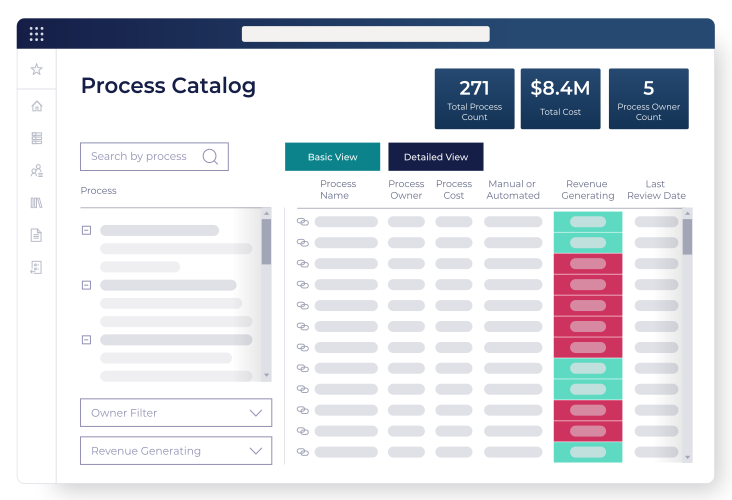
Centralized Business Process Repository
Store every process model in a structured, searchable repository. Support the full process hierarchy from value chain to sub-process, with controlled access at every level.
- View process coverage across the hierarchy in a structured repository dashboard
- Control who can create, edit, and publish models with role-based access
- Prioritize gaps by mapping process ownership across business units
BPMN 2.0 Modeling with Enforced Standards
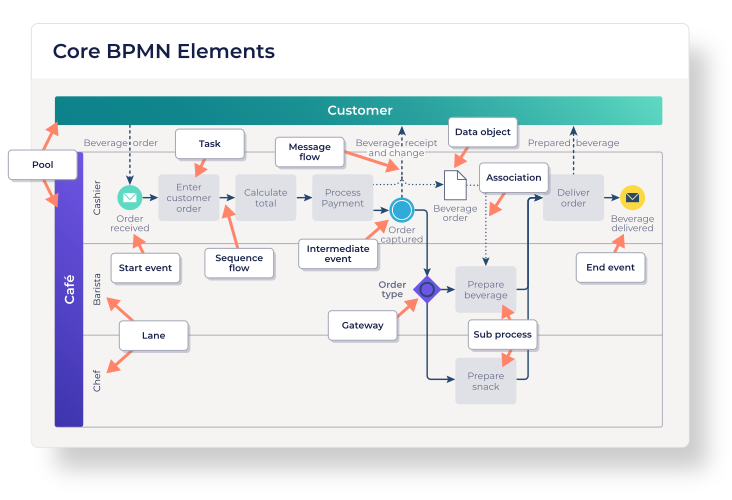
Model processes using BPMN 2.0 notation within a governed environment. Apply templates and notation rules that standardize how process models are built across the enterprise.
- Surface notation compliance status across the process model library
- Standardize naming conventions and notation through configurable governance controls
- Validate model quality before publication with structured approval workflows
Process Governance and Approval Workflows
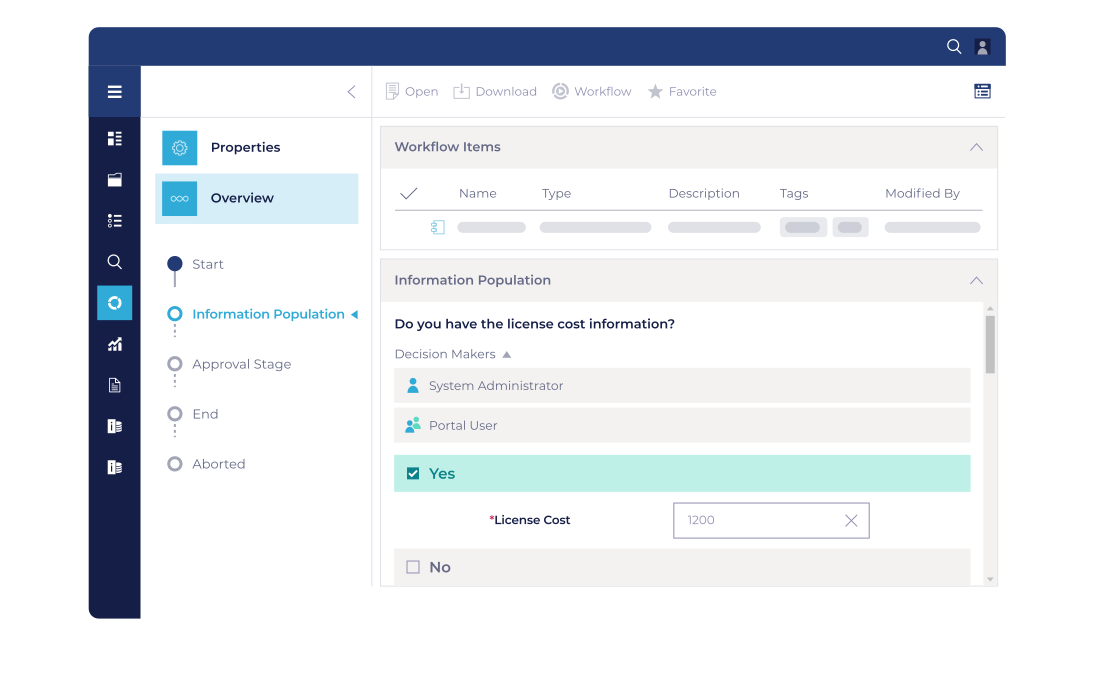
Govern who creates, reviews, and approves process models. Enforce approval workflows that keep the process library accurate, traceable, and aligned with organizational policy.
- Track model status and approval history across the full process lifecycle
- Govern access and editing rights with role-based permission controls
- Align process sign-off with stakeholder accountability at each process tier
Architecture-Connected Process Models
Link process models to enterprise architecture artifacts including applications, capabilities, and data. Trace how changes in one area impact processes across the organization and vice versa
- Map process-to-application dependencies in a connected architecture view
- Trace process linkages to capabilities, risks, and controls in one platform
- Decide ERP scope changes using process impact analysis across linked artifacts
Latest Success Stories

Your Role. Your Outcome.
The Right Process Clarity for Every Role
Whether you run operations, own the architecture, or lead the ERP program, governed process models change what you can see and decide.

Chief Operating Officer / Head of BPM
Chief Operating Officer, Head of BPM
Operational leaders can establish a common process baseline and govern how process documentation is created, maintained, and approved across the enterprise.
- Establish a single process library every business unit works from
- Standardize notation and naming across all process tiers Govern approval workflows to maintain process library accuracy
- Track process coverage gaps across the full value chain.

Chief Information Officer / Enterprise Architect
Chief Information Officer / Enterprise Architect
Technology leaders can link process models to systems, applications, and capabilities, giving architecture decisions a documented process foundation to work from.
- Map processes to supporting applications and data in one platform
- Surface process dependencies before system change decisions
- Align enterprise architecture planning with a governed process baseline
- Control who publishes process-to-architecture linkages.

Business Process Analyst
Business Process Analyst
Process analysts can build, validate, and publish BPMN models within a governed environment that enforces notation rules and routes models through structured approval.
- Build BPMN process models using governed templates and notation rules
- Submit models through structured approval workflows before publication
- Assign process ownership and accountability at every level of the hierarchy
- Identify and prioritize gaps in process coverage across business units.
Make it Real
Find Out If OrbusInfinity Fits Your Process Governance Program
Book a demo to see a live BPMN process library, governance controls, and how process models connect to your enterprise architecture.