
Architecture That Drives Decisions
Enterprise Architecture Software | OrbusInfinity
Turn fragmented architecture data into a governed, connected view of your enterprise, including your AI systems. OrbusInfinity's Enterprise Architecture Solution delivers pre-built visualizations, report packs, a best practice EA metamodel, and support for popular EA standards, including TOGAF and ArchiMate, so your team starts delivering insight from day one.

Challenge: Scattered Data, Conflicting Answers
Where Architecture Programs Lose Momentum
Fragmented data, limited visibility, and unclear value erode stakeholder trust and stall transformation.
Scattered Data, Conflicting Answers
Disconnected tools and spreadsheets breed duplicate records and conflicting versions of the truth. Architects spend more time reconciling data than advising on strategy, risk, and investment.

No Clear View of Dependencies
Without consistent models and reporting, leaders cannot trace dependencies, assess change impact, or spot redundancy before it becomes costly technical debt.

Hard to Prove EA Value
Slow delivery of EA artifacts and no common language make it difficult to build a shared vision. Stakeholders lose confidence, and architects struggle to keep pace with transformation programs.

From Complexity to Clarity
What OrbusInfinity Delivers
Governed architecture data and ready-made reporting give your team the clarity to align stakeholders and guide transformation decisions with confidence.

One Connected Source of Truth
Link capabilities, applications, technologies, and data in a single governed repository. Standardize terminology and trace relationships across the enterprise so there’s no more reconciling spreadsheets.

Portfolio Insight in Hours, Not Weeks
Publish capability and application landscapes quickly with pre-built visualizations and report packs. Answer portfolio questions with data your stakeholder’s trust.

Stronger Governance, Lower Risk
Surface data-quality gaps with audit and gap-analysis reporting. Improve compliance, reduce risk, and plan resilient change with confidence.
Ready on Day One
Purpose-Built to Accelerate EA Value
Pre-built report packs, visualizations, a best-practice metamodel, and support for EA standards, including TOGAF and ArchiMate, so your team starts delivering insight and not configuring the platform.
EA Standards and Frameworks
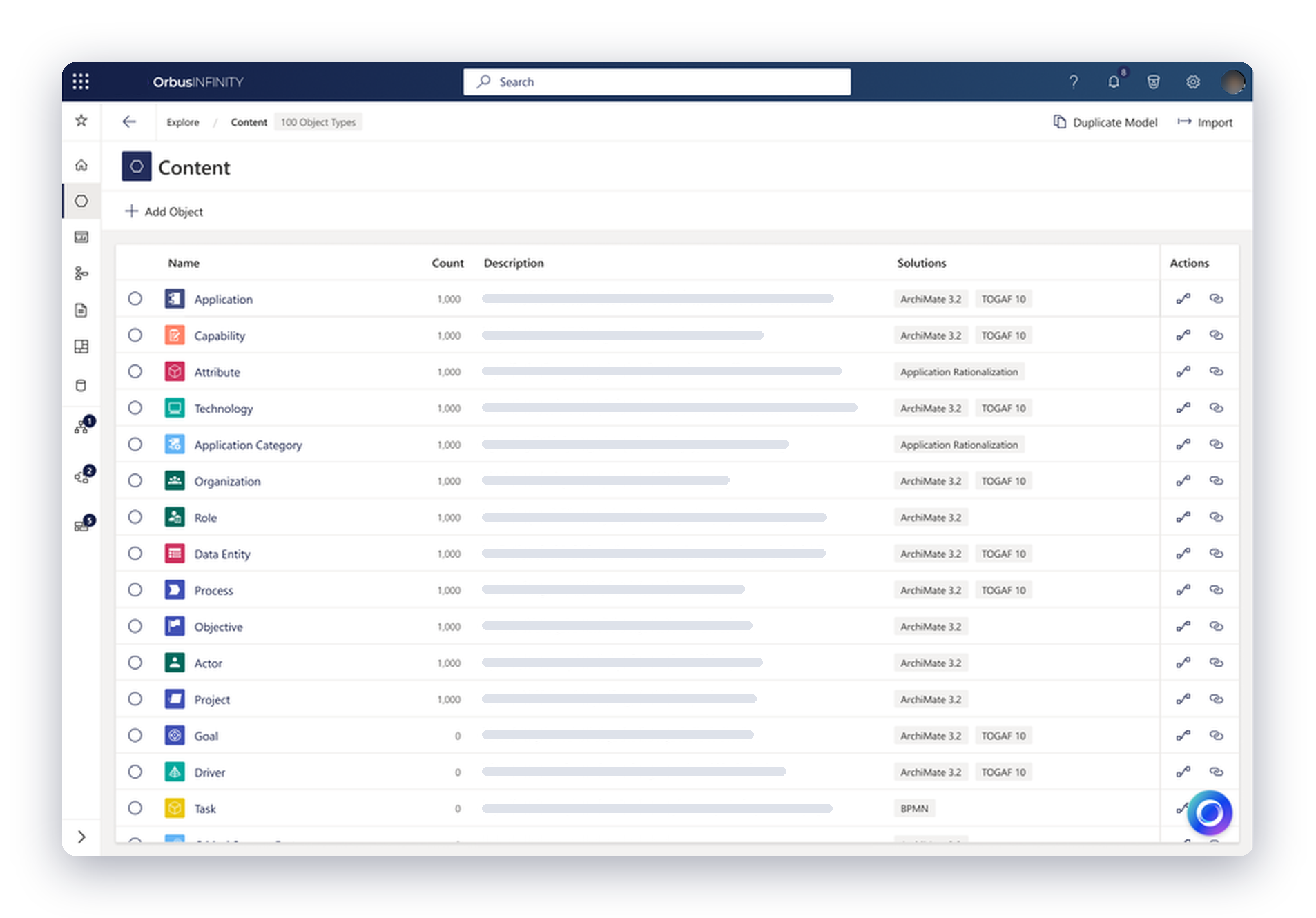
OrbusInfinity provides a pre-configured metamodel built around TOGAF and ArchiMate, so enterprise teams start on a validated foundation from day one rather than spending weeks configuring from blank.
AI Governance and Power
As an AI-powered platform, OrbusInfinity assists teams with developing their EA strategy and managing their enterprise architecture. In addition, it provides the framework and tools for intentional and structured architecting and governance of AI-enabled solutions.

Capability Visualizations
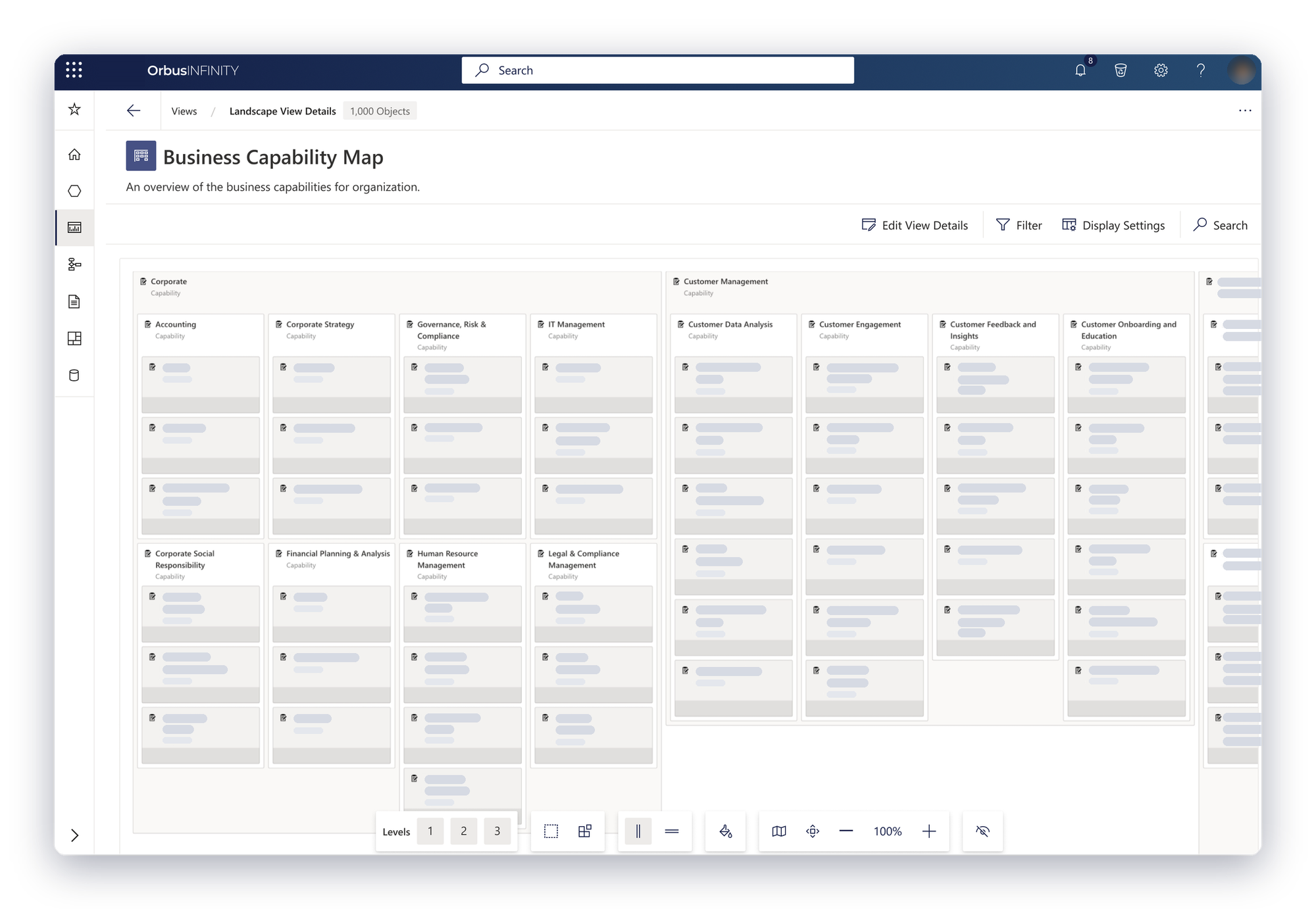
Interactive business capability maps connect strategy, investment, and change priorities so every stakeholder, from CIO to business unit leader, works from the same governed view. For large organizations managing multiple divisions, this replaces fragmented spreadsheets with a single source of architectural truth.
Application Landscapes
Application landscape reports map every application in the portfolio against the capabilities it supports, by function and by category. For large organizations managing hundreds of systems across multiple business units, these reports surface rationalization opportunities and redundancies that manual analysis cannot reach at scale.

Data Portfolio Reports
A core report pack for governing data assets, ownership, and criticality so data architecture becomes visible and actionable.
Sustainability Reports
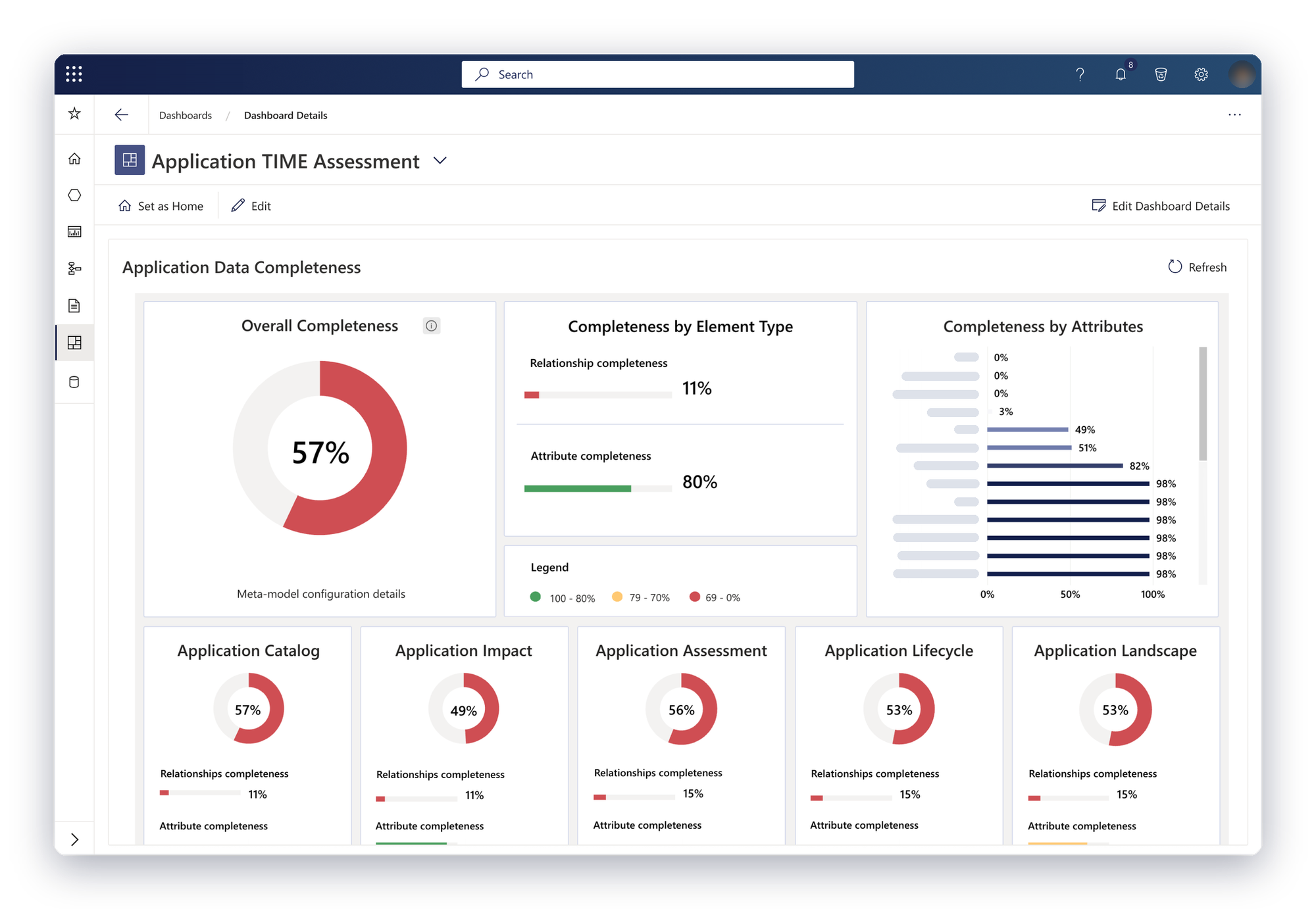
Sustainability management reports covering capability analysis, strategy overview, and project portfolio impact. Measure and communicate sustainability progress across programs.

One Platform
More Ways to Deliver Impact
Business Architecture
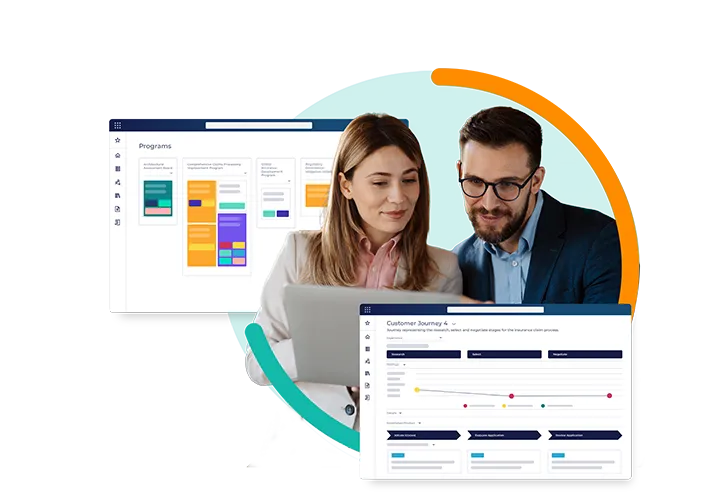
Map capabilities, value streams, and org structures to connect strategy to citizen outcomes.
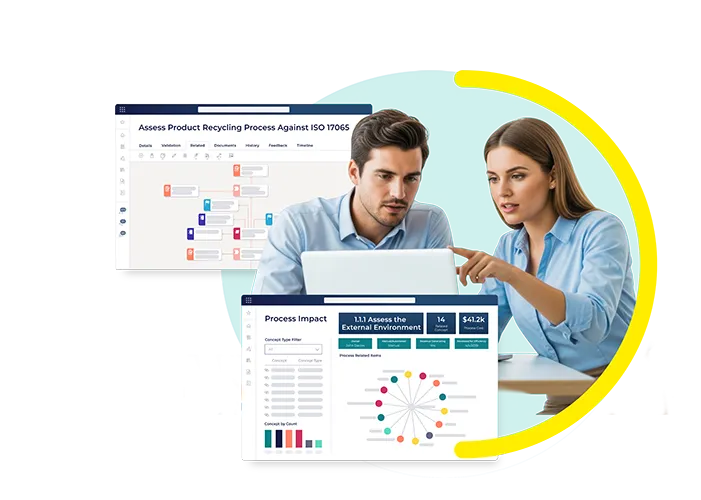
Business Process Management
Document, analyze, and optimize business processes to boost efficiency and citizen service delivery.
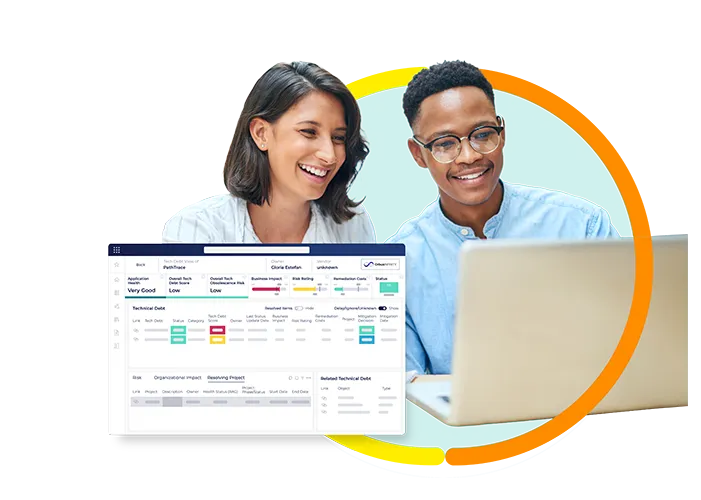
IT Portfolio Management
Gain full visibility into applications, technologies, and investments to cut waste and reduce risk.
Customer Success Stories


Global Conglomerate
A global leader in communications, automotive, and media transformed its enterprise architecture to enhance visibility, streamline operations, and drive strategic alignment.


The Mauritius Commercial Bank
MCB leveraged OrbusInfinity to transform its enterprise architecture, enabling collaboration, visibility, and business-aligned digital transformation.


PEAB
Learn how Peab is using OrbusInfinity to enhance its enterprise architecture practice, improve decision-making throughout the business and facilitate cross-team collaboration.