IT Portfolio Management
Technology Standards Management
Run a governed operating model for technology standards, linking each standard to the applications it affects, the policies it informs, and the lifecycle decisions that depend on it.
Standards Exist. Governance Needs Work.
Most enterprises have technology standards. Few have a reliable way to enforce them, track exceptions, or connect them to the applications that depend on them.
No Authoritative Standards Catalog
Standards live in wikis, slide decks, and email threads. Teams cannot find the current version, the owner, or the rationale. Decisions get made without a reliable reference.

Legacy Technology Creates Rising Costs
Without a clear legacy technology retirement plan tied to lifecycle status, unsupported technologies accumulate. Risk grows and portfolio costs rise with no clear exit path.

Impact Analysis Takes Too Long
When a standard changes, teams cannot quickly identify which applications are affected. Dependency mapping for standards compliance is manual, slow, and often incomplete.

Standards Built to Scale
Define Standards. See Every Dependency. Act Fast.
OrbusInfinity® supports a complete technology standards operating model. Define standards, assign ownership, set lifecycle status, and connect every standard to the applications that rely on it.
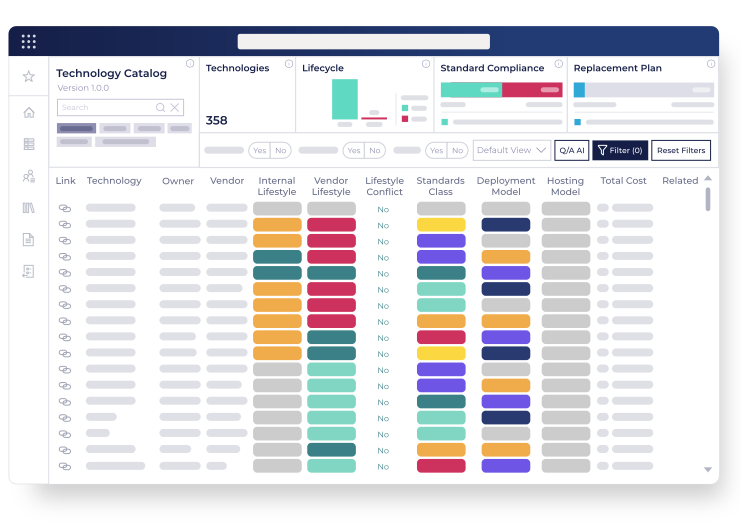
Technology Standards Catalog
Maintain a governed technology standards catalog with owner, rationale, review cadence, and current lifecycle status for every standard in your portfolio.
- Assign owners and review dates to each standard
- Record rationale and approval history
- Publish standards with controlled access by audience
Lifecycle Status Management
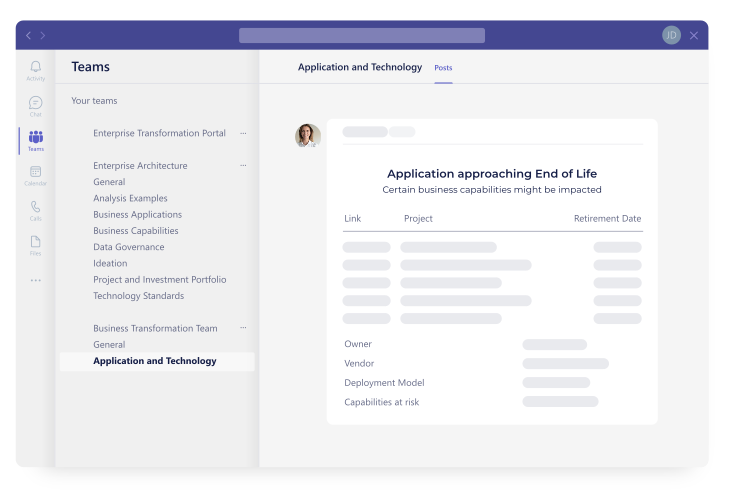
Apply an adopt, tolerate, invest, or retire status to every technology. Give architects and portfolio managers a consistent lens for every build, buy, and migration decision.
- Set technology lifecycle status across domains
- View portfolio distribution by lifecycle state
- Trigger review workflows when status changes
Application-to-Standards Mapping
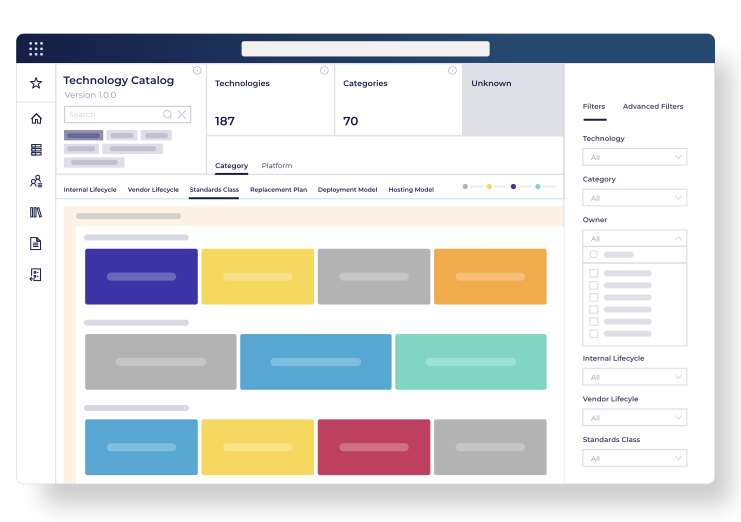
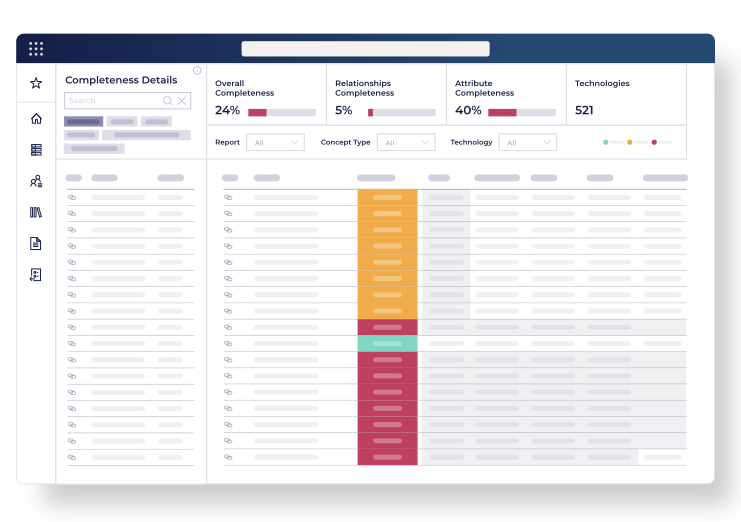
Connect applications to the technologies they use. Run application-to-technology standards mapping to see which systems rely on which technology standards and where compliance gaps exist.
- Map applications to the technologies they use
- Identify standards compliance gaps by domain
- Support rationalization with standards compliance data
Standards Impact Analysis
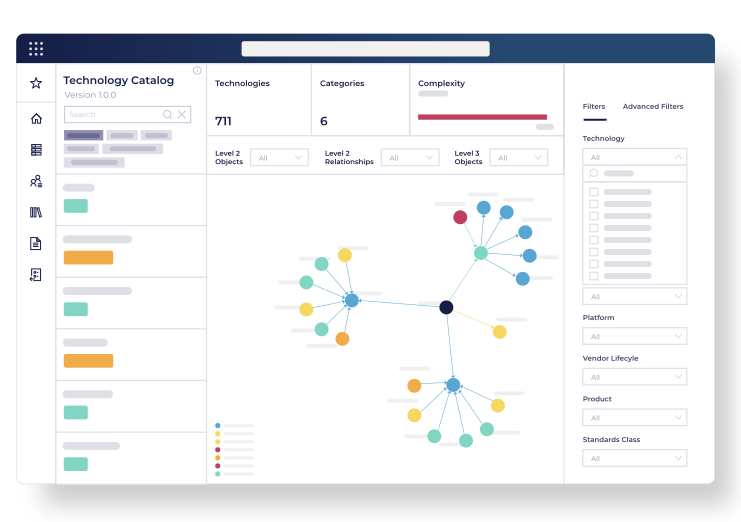
Run technology standards impact analysis before retiring or updating a standard. See every dependent application, platform, and team before you act.
- Identify all applications affected by a standard change
- Prioritize remediation by dependency criticality
- Share impact reports with architecture review boards
Policy-to-Standards Traceability
Enable policy-to-standards mapping so your CISO and compliance teams can trace every control requirement to the technology standards designed to satisfy it.
- Link security and regulatory policies to standards
- Identify standards gaps against policy requirements
- Support audit readiness with traceable evidence
Latest Success Stories

Clarity by Design
When Everyone Has Clarity, Standards Get Followed.
Technology standards governance serves multiple stakeholders. OrbusInfinity delivers role-specific views, so each leader gets the signals they need to act.

Enterprise Architect
Enterprise Architect
Govern Standards. Enforce Coherence.
Maintain a governed technology standards catalog with lifecycle status, traceability, and impact analysis. Make architecture decisions on a consistent, shared foundation.
- View all standards with owner and lifecycle status
- Run impact analysis before retiring a standard
- Map applications to used technologies to surface compliance gaps
- Track exceptions with owner and review date

Chief Information Officer
Chief Information Officer
Align Standards to Portfolio Strategy.
Connect technology standards governance to investment decisions. Reduce fragmentation, surface compliance gaps, and give your portfolio a consistent standards lens.
- See standards compliance across the portfolio
- Identify domains with high non-compliance rates
- Support rationalization with standards data
- Reduce one-off technology decisions at scale

Information Security Officers
Information Security Officer
Trace Every Policy to a Standard.
Map security and regulatory policies to the technology standards that satisfy them. Identify gaps, manage exceptions, and build a defensible audit trail.
- Link policies to standards with full traceability
- Identify standards gaps against control requirements
- Manage non-standard technology exceptions
- Support audit readiness with traceable evidence
Make your next move
See What You Can Do in OrbusInfinity
See how OrbusInfinity connects your technology standards catalog to applications, lifecycle status, and policies. Decide what to adopt, retire, or govern next.