



It gave us the freedom to design our architectural landscape around the platform features and not be an inhibitor, but actually an enabler.
The Challenge
Control Risks was bringing regional businesses together under a global service-line model. Each region had its own tools, processes, and technology standards, leaving teams without a shared view of priorities, costs, or dependencies.
- Regional differences made it harder to compare technology costs and business priorities.
- Teams risked duplicating work or reversing decisions later.
- Inconsistent technical blueprints turned early project decisions into downstream technical debt.
- Separate spreadsheets and assessments made it difficult to compare the full cost of technology options.
The Solution
Control Risks chose OrbusInfinity for its flexible modeling, core enterprise architecture model, and connections to Microsoft SharePoint and Microsoft Teams. The team used it to document technology components and how they fit together. It then built a total cost of ownership (TCO) model covering licensing, hosting, development, training, and maintenance.
- Established architecture principles to give teams a consistent basis for technology decisions.
- Created a shared TCO model that includes the costs of addressing technical debt, along with its business and technology impacts.
- Mapped technology components and relationships to help teams assess the effects and costs of proposed changes.
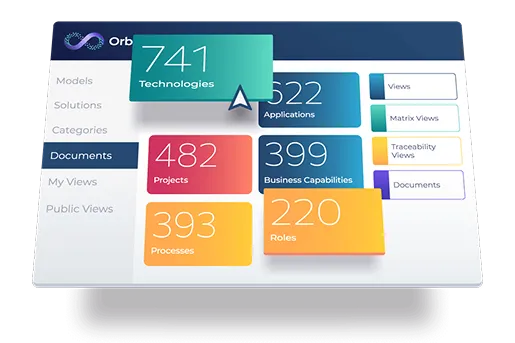
- Used dashboards and reports to give teams direct access to architecture information.
- Used OrbusInfinity APIs to support automated data collection and connections to internal systems.
The Result
- Identified $680,000 in potential savings over three years in one application rationalization exercise.
- Structured existing costing data in about three weeks.
- Gave teams a common TCO and technical debt model to compare options and inform investment decisions.
- Reduced reliance on separate spreadsheets for individual assessments.
- Made technology information easier for teams to find through dashboards and reports.
The initial rollout is focused on engineering. Control Risks is considering further use in business architecture, process modeling and optimization, AI governance, and closer connections with other systems.